How to Clean a Leather Handbag: Expert Tips for 2025
- By Lesondi
- Updated:
Do you want to repair a stain or scratch on your handbag yourself but are worried about making it worse? With the right cleaning agents and steps keep the leather safe and restore the luster of the leather.
Whether it’s a cherished luxury piece or a staple of your daily attire, maintaining the quality of leather requires specific care. Such as using a soft cloth to remove dust from the leather. Apply a small amount of mild soap with a damp cloth. Rub gently in circles to clean the surface. Wipe off soap with a clean, damp cloth. Dry with a soft towel to remove moisture. Let the bag air dry in a cool place. Use a leather conditioner to keep the material soft. Avoid too much water to prevent damage. Keep the bag away from direct sunlight and heat. Store in a dust bag to protect the leather.
In this guide, we’ll share expert tips to effectively clean and preserve your leather handbag for years to come, ensuring it continues to make a statement wherever you go!
Table of Contents
Understanding Leather Types and Their Care Needs
-Identify the type of leather your handbag is made of (full-grain, top-grain, genuine, or bonded leather)
Full-grain leather is the strongest. It has a natural surface. It lasts for many years. Top-grain leather is smooth. It has a treated surface. It resists stains better than full-grain. Genuine leather is of lower quality. It feels thinner. It wears out faster. Bonded leather is made from leather scraps. It peels over time. It does not last long.
-Explain how different leathers react to cleaning agents and moisture
Full-grain leather absorbs moisture. It darkens when wet. It needs a conditioner after cleaning. Top-grain leather resists moisture better. It does not absorb as much. Harsh cleaners damage its finish. Genuine leather loses color easily. Too much water makes it weak. Bonded leather breaks down fast. It cannot handle strong cleaners. Water makes it peel.
-Importance of knowing your leather to choose the right cleaning approach
Cleaning the wrong way ruins the leather. Using too much water stains full-grain leather. Harsh soap removes the coating on top-grain leather. Genuine leather cracks if it dries too fast. Bonded leather falls apart with strong chemicals. A full-grain leather bag costs $500 or more. Using the wrong cleaner wastes money. Knowing the leather type helps keep the bag looking new.
Everyday Maintenance Tips for Leather Handbags
-Regular Dusting and Wiping Techniques to Prevent Dirt Buildup
Leather bags collect dust and dirt. Wipe the surface with a soft, dry cloth every day. Use a microfiber cloth to remove fine dust. Once a week, wipe with a slightly damp cloth. Do not use too much water. Leather absorbs moisture and can get damaged. Use a leather cleaner once a month. Choose a cleaner made for handbags. Some cleaners have chemicals that can dry out the leather. Test the cleaner on a small area first. If there is no color change, use it on the whole bag.
-The Right Way to Store Your Leather Handbag to Avoid Damage
Store your leather bag in a cool, dry place. Avoid direct sunlight. Too much sun can fade the color. Keep it in a dust bag or a pillowcase. Plastic bags trap moisture and cause mold. Stuff the bag with tissue paper or a soft cloth. This helps keep its shape. Do not overfill it. Too much pressure can stretch the leather. Store the bag upright. Hanging can damage the straps over time. Put silica gel packets inside to absorb moisture. Check the bag often for any signs of mold or cracking.
-Quick Spill Cleanup Tips to Avoid Stains
Clean spills as soon as they happen. Use a dry cloth to blot the liquid. Do not rub. Rubbing spreads the stain. For water-based spills like coffee or juice, use a damp cloth. For oil-based spills like makeup or lotion, sprinkle cornstarch or baking soda on the spot. Let it sit for a few hours. The powder will absorb the oil. Wipe it off gently. If the stain remains, use a leather cleaner. Avoid using soap or alcohol. These can dry out the leather and cause cracks.

Step-by-Step Guide to Cleaning Your Leather Handbag
-What Cleaning Products Are Safe for Leather?
Use a cleaner made of leather. Avoid products with alcohol, bleach, or ammonia. These can dry out the leather and cause cracks. A mild, fragrance-free soap is safe. Choose a soap with a pH between 5 and 7. Harsh soaps remove natural oils and make leather stiff. Leather conditioners help keep the material soft. Use a conditioner with natural oils like lanolin or beeswax. Avoid silicone-based conditioners. These can clog the leather and make it sticky. Always test a product on a small hidden area first.
-DIY Cleaning Solution Recipes for Gentle Cleaning
A simple cleaning mix uses water and mild soap. Mix one cup of warm water with a few drops of dish soap. Stir until bubbles form. Another mix uses vinegar and water. Mix equal parts of white vinegar and water. Vinegar removes stains and kills bacteria. For oil stains, use cornstarch or baking soda. Sprinkle a small amount on the stain. Let it sit for a few hours. Brush it off with a soft cloth. Always use a clean, dry cloth to wipe off excess liquid. Too much moisture can damage leather.
-Key Steps for Deep Cleaning Your Handbag at Home
1. Empty the bag. Take out all items. Shake the bag upside down. Remove dust, crumbs, and small debris. Use a handheld vacuum for deep corners.
2. Wipe the surface. Use a dry microfiber cloth. Remove loose dirt and dust. Pay attention to seams and edges.
3. Prepare the cleaning solution. Mix one cup of warm water with a few drops of mild dish soap. Stir until bubbles form. Use distilled water if possible. Tap water can leave mineral stains.
4. Dampen a cloth. Dip a soft cloth into the solution. Wring it out well. The cloth should be damp, not wet. Too much moisture can damage leather.
5. Clean the leather. Wipe the bag gently in circular motions. Focus on stained areas. Do not rub too hard. Rubbing can spread stains.
6. Remove excess moisture. Use a dry cloth to wipe off any leftover solution. Let the bag air dry at room temperature. Do not place it under direct sunlight. Heat can cause cracks.
7. Condition the leather. Apply a small amount of leather conditioner. Use a clean, soft cloth. Spread it evenly. Let the bag absorb it for 10–15 minutes.
8. Buff the surface. Use another dry cloth. Wipe off any extra conditioner. This restores shine and prevents buildup.
9. Check the hardware. Clean metal parts with a dry cloth. Use a small amount of metal polish for tarnished areas. Avoid getting polish on the leather.
10. Store properly. Keep the bag in a dust bag or a pillowcase. Stuff it with tissue paper to maintain its shape. Place silica gel packets inside to prevent moisture buildup.
Dealing with Common Leather Handbag Issues
-How to Remove Ink Stains
1. Blot the stain. Use a dry paper towel or soft cloth. Press gently. Do not rub. Rubbing spreads the ink.
2. Use rubbing alcohol or nail polish remover. Dip a cotton swab in a small amount of rubbing alcohol or acetone-free nail polish remover. Dab the stain lightly. Do not soak the leather.
3. Wipe with a clean cloth. Use a damp cloth to remove any leftover residue.
4. Apply leather conditioner. Rub a small amount over the cleaned area. This prevents drying and cracking.
Note: If the stain does not fade, take the bag to a professional cleaner.
-Getting Rid of Water Spots and Grease Stains
Water Spots:
1. Dampen a cloth. Use a soft cloth with a small amount of distilled water.
2. Gently wipe the entire area. Even out the moisture. This prevents uneven drying.
3. Let the bag air dry. Keep it at room temperature. Avoid direct heat or sunlight.
4. Buff the leather. Use a dry cloth to restore shine.
Grease Stains:
1. Blot with a dry cloth. Remove as much grease as possible. Do not rub.
2. Apply cornstarch or baking soda. Sprinkle a small amount over the stain. Let it sit for a few hours. The powder absorbs the oil.
3. Brush off the powder. Use a soft cloth to remove the excess.
4. Repeat if needed. Some stains take longer to absorb.
5. Condition the leather. Apply a small amount to restore softness.
-Fixing Scratches and Scuffs
1. Buff with a dry cloth. Use a soft cloth to rub the scratch. Light scratches can fade with friction.
2. Use a leather conditioner. Apply a small amount. Rub in circular motions. Let it absorb for 10–15 minutes.
3. Apply a matching leather polish. Choose a polish close to the bag’s color. Use a cotton swab to apply it directly to the scratch.
4. Buff again. Use a dry cloth to blend the polish with the leather.
5. For deep scratches, use leather repair cream. Apply a thin layer over the damaged area. Let it dry. Buff gently for a smooth finish.
Professional Care and When to Seek It
-Signs That Your Leather Handbag Needs Professional Cleaning
Leather bags develop stains, odors, and cracks over time. Some issues need professional care.
1. Deep stains that do not fade. Ink, oil, and dye stains can soak into the leather. If home cleaning does not work, seek expert help.
2. Persistent odors. Leather absorbs smells from smoke, food, and moisture. If bad smells remain after airing out the bag, professional deodorizing is needed.
3. Mold or mildew spots. White or green patches mean moisture damage. A professional cleaner removes mold and prevents further damage.
4. Severe dryness or cracking. Dry leather loses flexibility. If conditioning does not restore softness, professional treatment is required.
5. Faded or uneven color. Sun exposure and cleaning products can cause discoloration. Professionals can restore color and shine.
-Benefits of Professional Conditioning and Polishing
Professionals use high-quality products and tools. Their treatment lasts longer than home care.
1. Deep hydration. Experts use special conditioners that absorb into the leather. This prevents cracking and keeps the bag soft.
2. Scratch and scuff repair. Polishing removes light scratches and evens out the surface. Leather creams and dyes blend small imperfections.
3. Shine restoration. Professional polishing enhances the bag’s original finish. It protects the leather from future damage.
4. Protective coating. Some treatments add a water-resistant layer. This helps prevent future stains.
-How to Choose a Reputable Leather Specialist
Finding the right professional ensures safe and effective cleaning.
1. Check reviews and ratings. Look for customer feedback online. A shop with many positive reviews is more reliable.
2. Ask about experience. Choose a specialist with years of experience in leather care.Some cleaners specialize in clothes, not handbags.
3. Request details on products used. A good cleaner uses gentle, leather-safe products. Harsh chemicals can damage the bag.
4. Look for before-and-after photos. Many professionals share their work online. Clear improvements in color and texture show skill.
5. Compare prices. Professional cleaning costs vary. A basic cleaning starts at $50. Deep cleaning and color restoration can cost $100 or more.

How to Protect Your Handbag for the Long Term
-Best Practices for Conditioning and Moisturizing Leather to Prevent Cracks
1. Condition every three to six months. Use a leather conditioner to maintain moisture. Bags stored in dry areas need conditioning every three months. Bags used daily need it every six months.
2. Apply a small amount. Use a clean, soft cloth. Rub a thin layer of conditioner in circular motions. Let the leather absorb it for 10–15 minutes. Wipe off the excess with a dry cloth.
3. Use natural oils carefully. Lanolin and beeswax are good for leather. Avoid olive oil and coconut oil. These can darken leather and cause uneven spots.
4. Test on a hidden area. Some conditioners change the color of leather. Always check before applying to the whole bag.
-Recommended Products for Leather Protection Against Weather and Wear
1. Leather waterproof sprays. A silicone-free spray repels water without clogging the leather. Apply a light coat before using the bag in rainy weather. Good brands include Collonil Carbon Pro and Apple Brand Garde.
2. UV protection creams. Sunlight fades leather over time. A UV-blocking leather cream protects color and prevents drying. Recommended options include Chamberlain’s Leather Milk and Lexol Leather Conditioner.
3. Dust bags and storage cases. Storing a bag in a breathable dust bag prevents scratches. Use a cotton pillowcase if a dust bag is not available. Keep the bag away from direct sunlight and heat.
4. Leather repair balm. Small scuffs and faded spots can be fixed at home. Saphir Renovating Cream and Fiebing’s Leather Dye restore color and smooth the surface.
-Tips for Handling Leather Gently During Cleaning and Regular Use
1. Avoid overloading the bag. Too much weight stretches leather. This weakens handles and straps. Carry only essentials to prevent sagging.
2. Store the bag properly. Stuff it with tissue paper or soft fabric to keep its shape. Never hang a leather bag by its straps for long periods.
3. Use clean hands. Dirt and oil from hands transfer to leather. Wash hands before handling light-colored bags.
4. Wipe off dust daily. A soft microfiber cloth removes surface dirt. This prevents buildup that can dull the leather over time.
5. Be careful with zippers and hardware. Rough handling can cause scratches. Open and close zippers slowly to avoid damage.
What Is the Safest Way to Clean a Leather Handbag?
-Use the Right Cleaning Method
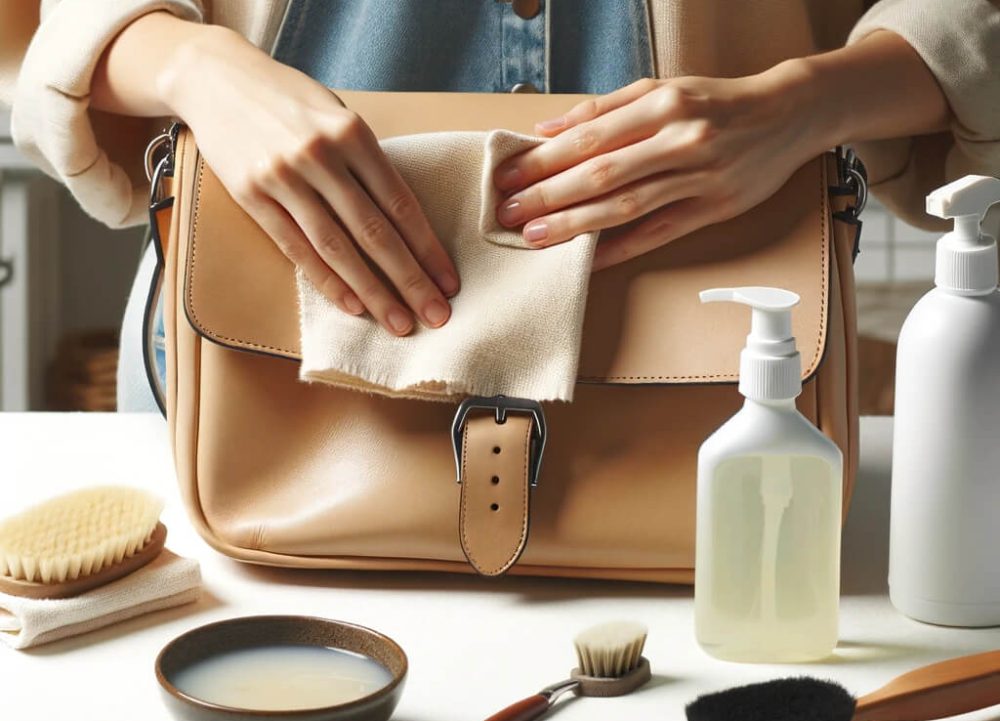
1. Use a soft cloth. A microfiber cloth removes dust without scratching the leather. Wipe the bag every day to prevent dirt buildup.
2. Prepare a gentle cleaning solution. Mix one cup of warm water with a few drops of mild dish soap. Stir until bubbles form. Avoid strong detergents. Harsh chemicals dry out the leather.
3. Dampen a cloth, do not soak it. Dip a soft cloth into the cleaning solution. Wring it out well. Too much moisture damages leather.
4. Wipe the leather gently. Move the cloth in circular motions. Clean the entire surface to prevent water spots. Focus on stained areas without rubbing too hard.
5. Dry with a clean towel. Remove excess moisture with a dry cloth. Let the bag air dry at room temperature. Do not use a hairdryer. Heat causes cracks.
6. Apply a leather conditioner. Once the bag is dry, use a small amount of leather conditioner. Rub it in with a soft cloth. This keeps the leather soft and prevents drying.
-Avoid Damaging Products
1. No alcohol or bleach. These chemicals strip natural oils from leather. Bags become dry and brittle.
2. No baby wipes. Many wipes contain alcohol and perfumes. These cause discoloration and cracks.
3. No vinegar for regular cleaning. Vinegar removes stains but dries out leather. Use only for deep cleaning when necessary.
4. No excessive water. Leather absorbs moisture. Too much water causes stains and weakens the material.
-Test Before Cleaning
1. Pick a hidden spot. Test on the bottom or inside of the bag. Apply a small amount of cleaner.
2. Wait a few minutes. Check for color changes or texture damage. If the leather stays the same, continue cleaning.
3. Stop if damage appears. If the leather darkens or dries out, use a different cleaner.
What Household Products Can I Use to Clean Leather?
-Mild Dish Soap and Water (Dish soap removes dirt without harming leather)
1. Mix a cleaning solution.A dd a few drops of mild dish soap to one cup of warm water. Stir until bubbles form.
2. Dampen a cloth. Use a soft microfiber cloth. Wring out excess liquid.
3. Wipe the leather gently. Move the cloth in circular motions. Focus on dirty spots. Do not rub too hard.
4. Dry with a clean towel. Remove moisture immediately. Let the bag air dry at room temperature.
-White Vinegar and Water (Vinegar removes stains and kills bacteria. Use only for spot cleaning)
1. Mix equal parts of vinegar and water. Use one cup of each. Stir well.
2. Test on a hidden area .Apply a small amount to an unseen part of the bag. Wait a few minutes. Check for color changes.
3.Dab the stain gently.Use a cotton ball or soft cloth. Do not soak the leather.
4. Wipe with a damp cloth. Remove excess vinegar. Dry with a soft towel.
-Baking Soda for Grease Stains(Baking soda absorbs oil without damaging leather)
1. Sprinkle baking soda on the stain .Cover the spot with a light layer.
2. Let it sit for a few hours. The powder absorbs the grease.
3. Wipe off the residue.Use a dry cloth to remove the baking soda.
4. Repeat if needed. Some stains take longer to lift.
-Cornstarch for Oil Spots(Cornstarch works like baking soda. It pulls oil out of leather)
1. Apply cornstarch to the stain. Sprinkle a small amount directly on the spot.
2. Let it sit overnight .The powder absorbs the oil over time.
3. Brush off with a soft cloth. Wipe away the powder gently.
4. Condition the leather .Apply a small amount of leather conditioner to keep the area soft.
-Rubbing Alcohol for Ink Stains(Alcohol removes ink but can dry out leather. Use with caution)
1. Dip a cotton swab in rubbing alcohol. Use a small amount. Do not soak the leather.
2. Dab the stain lightly. Press gently. Do not rub. Rubbing spreads the ink.
3. Wipe with a damp cloth. Remove any remaining alcohol.
4. Apply leather conditioner. Restore moisture to prevent cracks.
What Is the Best Way to Store a Leather Handbag?
-Keep the Bag in a Cool, Dry Place
1. Choose the right location. Store the bag in a closet or drawer. Avoid damp areas like basements. High humidity causes mold.
2. Keep away from direct sunlight. Sunlight fades leather over time. A dark, shaded place is best.
3. Maintain room temperature. Extreme heat or cold dries out leather. A temperature between 60–75°F (15–24°C) is ideal.
-Use a Dust Bag or Pillowcase
1. Use a breathable fabric. A cotton dust bag or pillowcase allows airflow. Plastic bags trap moisture and cause mold.
2. Wrap metal parts. Use tissue paper to cover zippers and buckles. This prevents scratches on the leather.
3. Close the bag properly. Fasten straps and zippers before storing. This helps maintain the shape.
-Stuff the Bag to Keep Its Shape
1. Fill the bag with tissue paper or soft fabric. Use acid-free tissue paper to prevent moisture buildup. Avoid newspaper. Ink can transfer to the lining.
2. Do not overfill. Too much stuffing stretches the leather. Use just enough to maintain the shape.
3. Use a bag shaper. A foam or fabric insert keeps the structure firm. This helps for long-term storage.
-Avoid Hanging the Bag
1. Store the bag upright. Place it on a flat surface to prevent sagging.
2. Do not hang by the straps. Straps stretch over time. This weakens the leather and causes cracks.
3. Use a shelf or storage box. A sturdy shelf keeps the bag stable. A structured box adds extra protection.
-Prevent Moisture Damage
1. Use silica gel packets. Place one inside the bag to absorb excess moisture. Change them every few months.
2. Check for mold regularly. Inspect the bag every few weeks. If mold appears, wipe it with a dry cloth and let it air out.
3. Keep bags spaced apart. Do not stack bags on top of each other. This prevents pressure marks and dents.
When Should I Take My Leather Bag to a Professional Cleaner?
-Deep Stains That Do Not Fade (Some stains soak into leather and do not come out with home cleaning. )
1. Ink stains that spread. Ink penetrates leather quickly. Rubbing alcohol may work, but deep stains need professional treatment.
2. Oil and grease stains that do not lift. Baking soda or cornstarch absorbs surface oil, but deep stains require special cleaning.
3. Dye transfer from clothes. Dark jeans or fabrics can stain leather. A professional cleaner can remove the dye without damaging the bag.
-Persistent Odors That Do Not Go Away (Leather absorbs smells from the environment. Some odors stay even after airing out the bag.)
1. Smoke odor that lingers. Cigarette or fire smoke clings to leather. A professional deodorizing treatment is needed.
2. Musty smell from moisture. Mold or mildew causes a strong odor. Professionals use special solutions to remove mold safely.
3. Food or perfume scent that does not fade. Spilled drinks or strong perfumes seep into leather. Deep cleaning is required.
-Cracks, Dryness, or Peeling (Leather loses moisture over time. Some damage cannot be fixed with regular conditioning.)
1. Leather that feels rough or stiff. Dry leather needs deep conditioning by a professional.
2. Small cracks appear on the surface. Cracks mean the leather is losing its natural oils. Experts restore flexibility with high-quality conditioners.
3. Peeling or flaking of the leather finish. Some finishes wear off with time. Professionals can refinish or re-dye the leather.
-Mold or Mildew Spots (Moisture exposure causes mold and mildew growth. These can damage the leather permanently.)
1. White or green patches forming on the leather. Mold spreads quickly. A professional cleaner removes it safely.
2. Sticky or damp areas on the surface. This indicates moisture trapped inside. Cleaning at home may not be enough.
3. Mold smell that stays even after wiping. A deep cleaning process is needed to prevent further damage.
-Fading, Discoloration, or Uneven Color (Leather color fades with time. Sun exposure and cleaning products can cause uneven patches.)
1. Sun-damaged leather that looks dull. A professional can restore color and shine with leather-safe dyes.
2. Spots that look lighter or darker than the rest of the bag. Uneven fading needs expert color correction.
3. Water stains that leave marks. Some water spots stay even after drying. A professional can fix the damage.
-Hardware or Structural Damage (Some issues cannot be fixed at home.)
1. Broken zippers or loose stitching. A professional can replace or repair damaged parts.
2. Handles or straps that are stretched or cracked. Leather repair specialists can reinforce or replace worn-out straps.
3. The bag losing its shape. Experts can reshape the bag using structured inserts and leather treatments.
Conclusion
Cleaning and maintaining your leather handbag doesn’t just extend its life. it also ensures it remains a stylish part of your wardrobe. With the right care, your leather accessory can look as good as new for years to come. Don’t forget, if you’re ever in doubt, consulting a professional can save you time and preserve the quality of your cherished handbag.
If you like it, Share :
Read other blog posts